
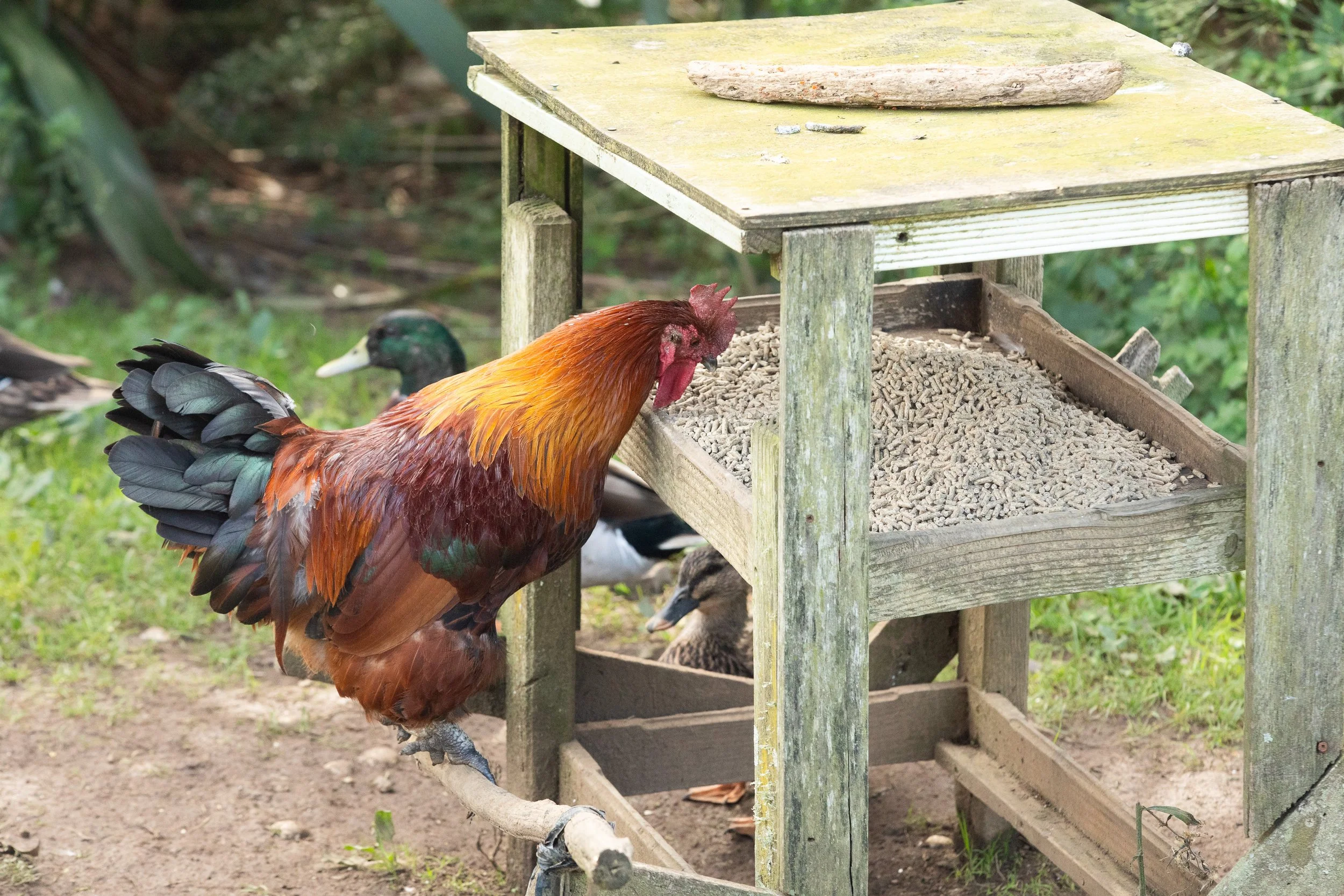
Onetangi roosters
Caring for the large colony of abandoned roosters at Onetangi Sports Park.
History of the Onetangi roosters
Dumping pet roosters has been a problem on Waiheke since the late 1990s when a colony of abandoned birds began to grow at Mātiatia. Tourists and locals fed them, and they became a bit of a visitor attraction.
Rather than culling the birds, the community encouraged Auckland Council to relocate them to the entrance of the Onetangi Sports Park.
Volunteers
Volunteer groups, including ‘Caring for the Roosters of Waiheke’ (CROW) and ‘Friends of the Onetangi Roosters’, have worked tirelessly to care for the abandoned birds, helping to improve their welfare and reduce the risk of disease.
For many years, these dedicated volunteers relied entirely on donations from the Waiheke community to provide food and essential care. At times, as many as 70 roosters have been living at the site, making the cost of feeding them a constant challenge.
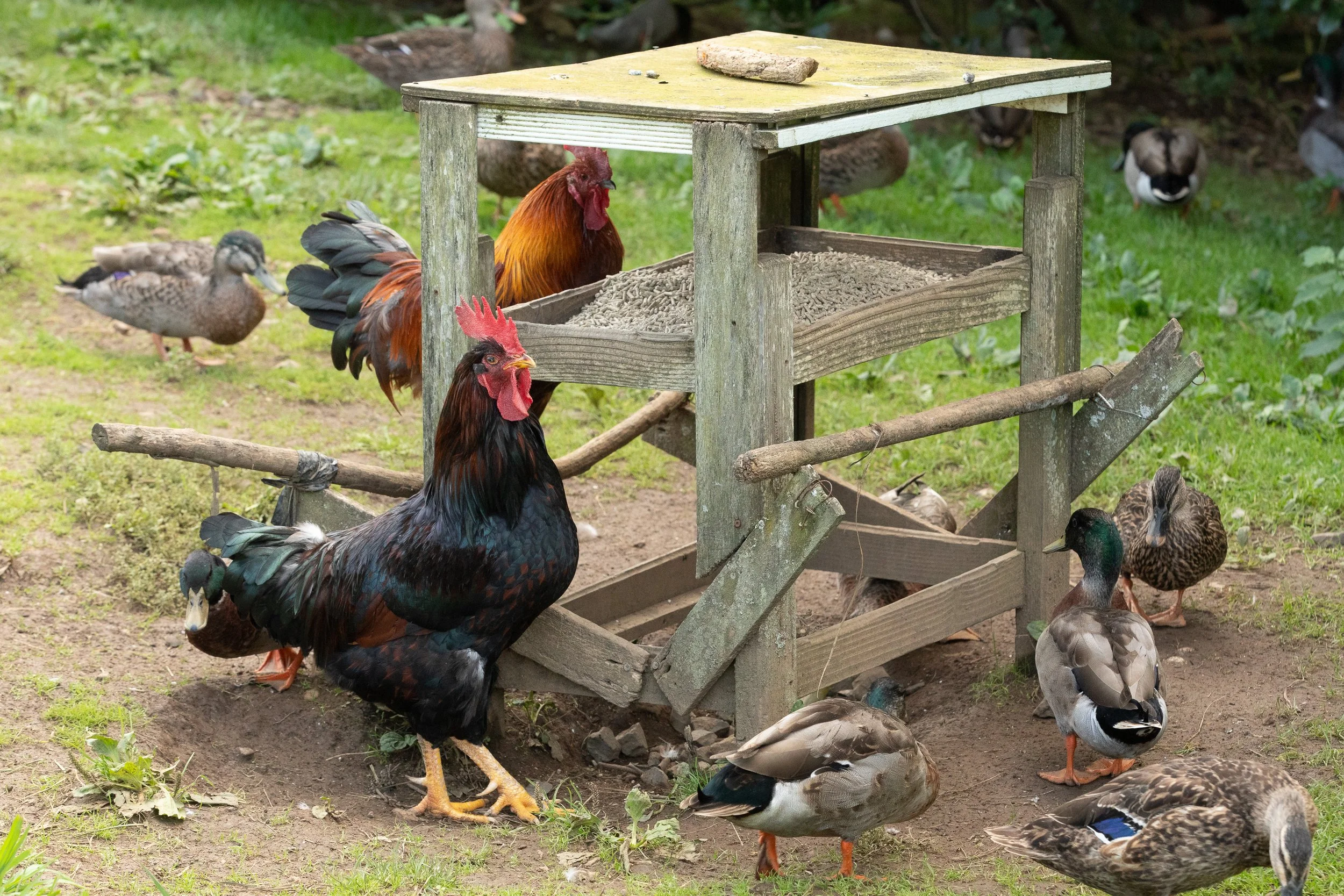
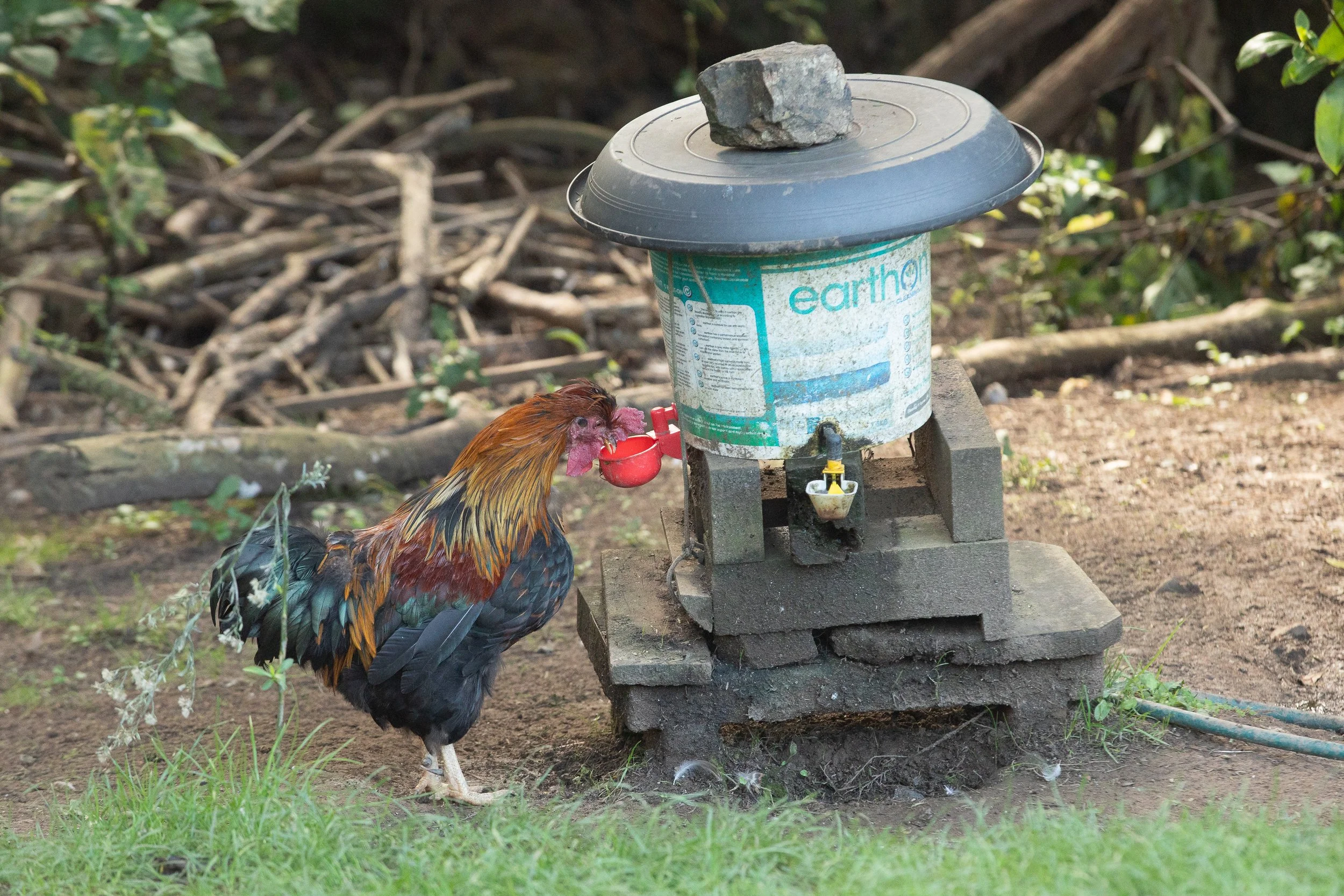
Over the years, volunteers have built coops, installed water stations and designed custom feeding stations that provide fresh food and water while helping to keep feed dry and protected from the elements. The feeding stations are also cleverly designed to discourage the resident ducks from helping themselves to the roosters' meals.
A dedicated ‘rooster roster’ makes sure the birds are fed and watered every single day. This is a remarkable community effort that has continued for many years.
In 2025, WISCA was proud to begin funding all of the food for the Onetangi roosters, helping to make sure they continue to receive the care they need while looking at longer-term solutions.
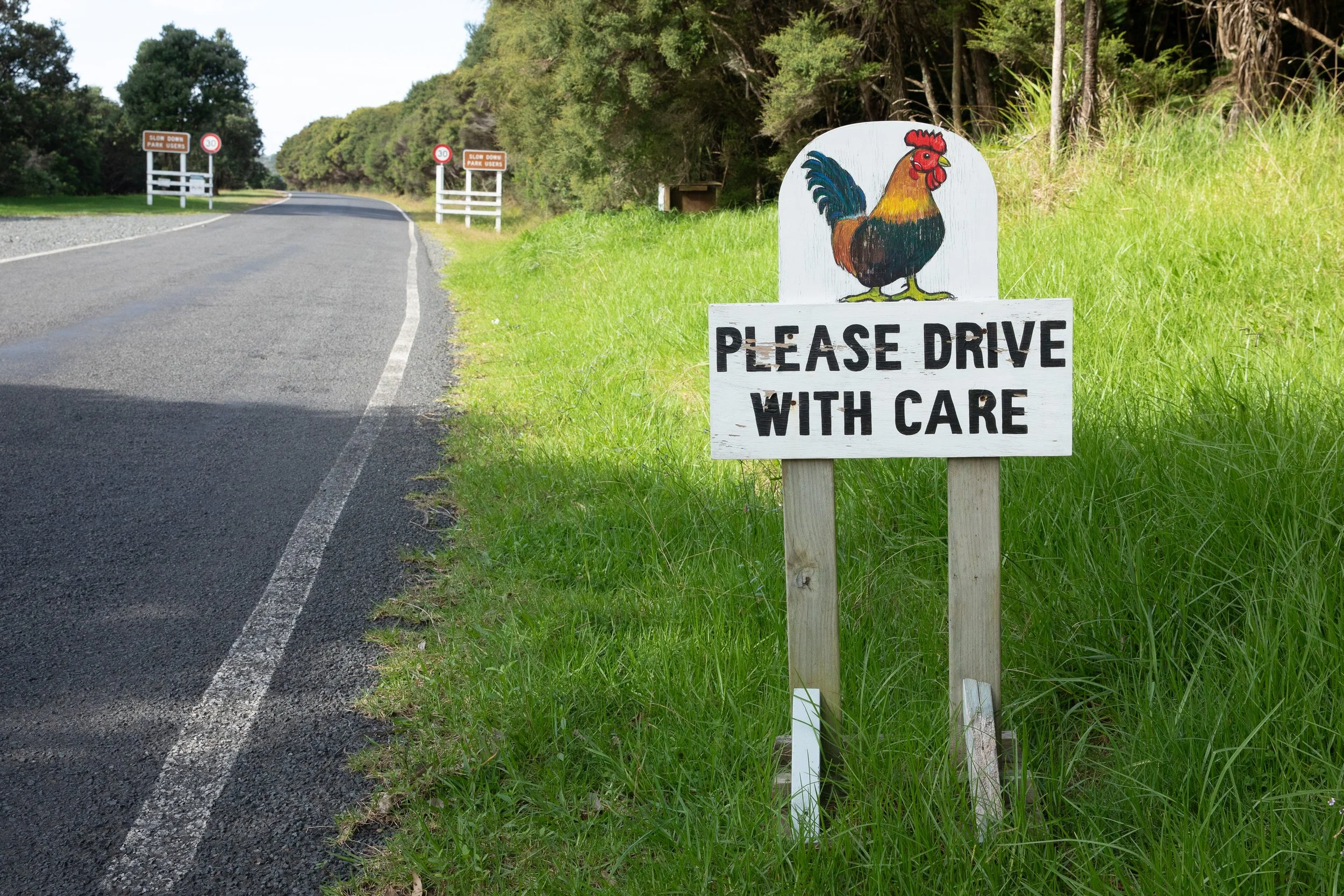
Abandoning a Rooster Is against the law.
Abandoning or dumping a rooster is an offence under the Animal Welfare Act 1999. Pet owners have a legal responsibility to provide for their animals' physical, health and behavioural needs, including adequate food, water, shelter and care.
Under the Act:
Abandoning an animal may be considered neglect or ill-treatment.
People who abandon animals may face prosecution or fines.
Authorities, including the SPCA and local councils, have the power to investigate animal welfare concerns and take appropriate action.
Leaving a rooster to fend for itself is not a humane solution. If you can no longer care for your rooster, please contact WISCA for advice. We may be able to help you explore safe and responsible alternatives.
For more information, refer to Section 14 of the Animal Welfare Act 1999.
The Animal Welfare Act
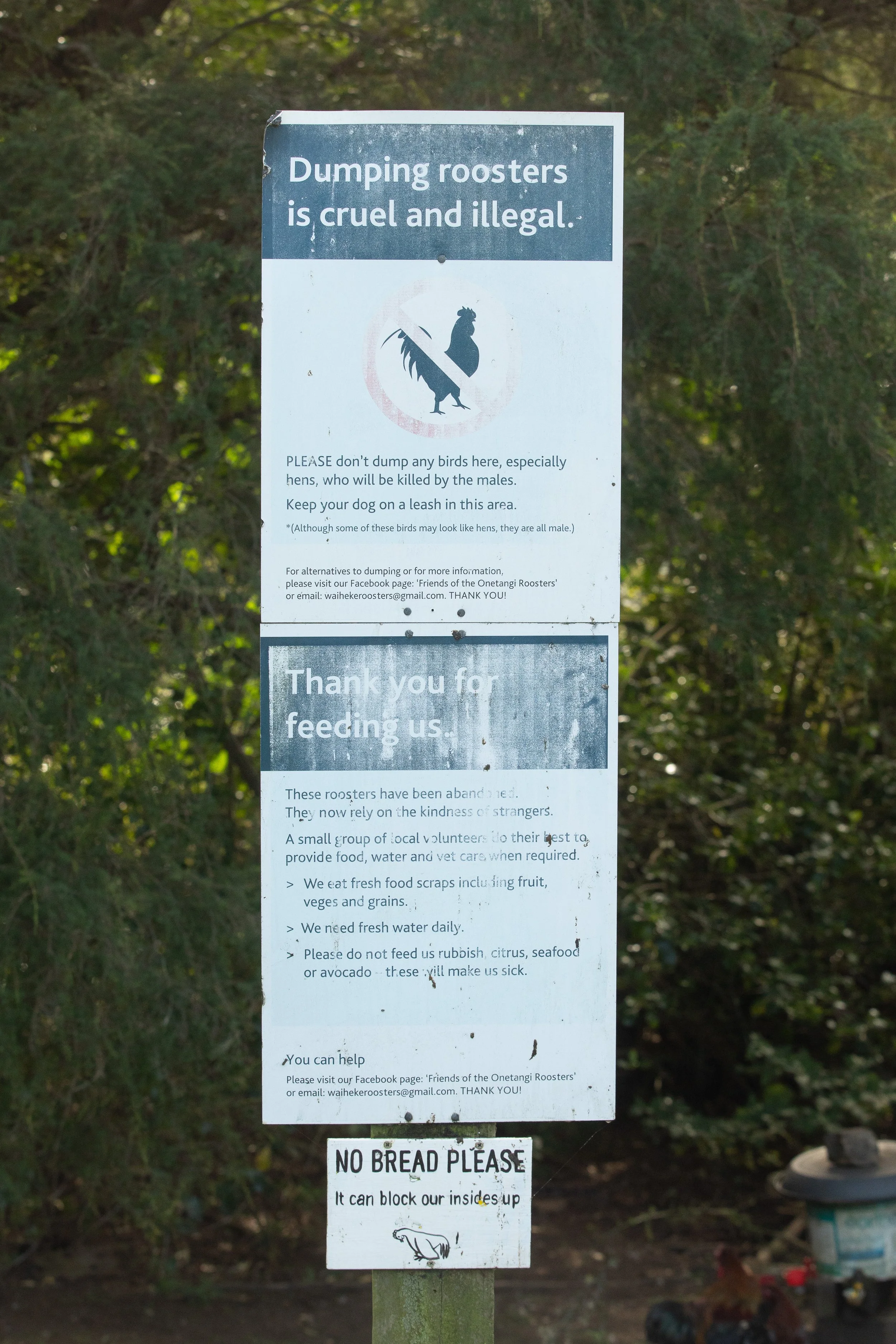
Dumping roosters is cruel
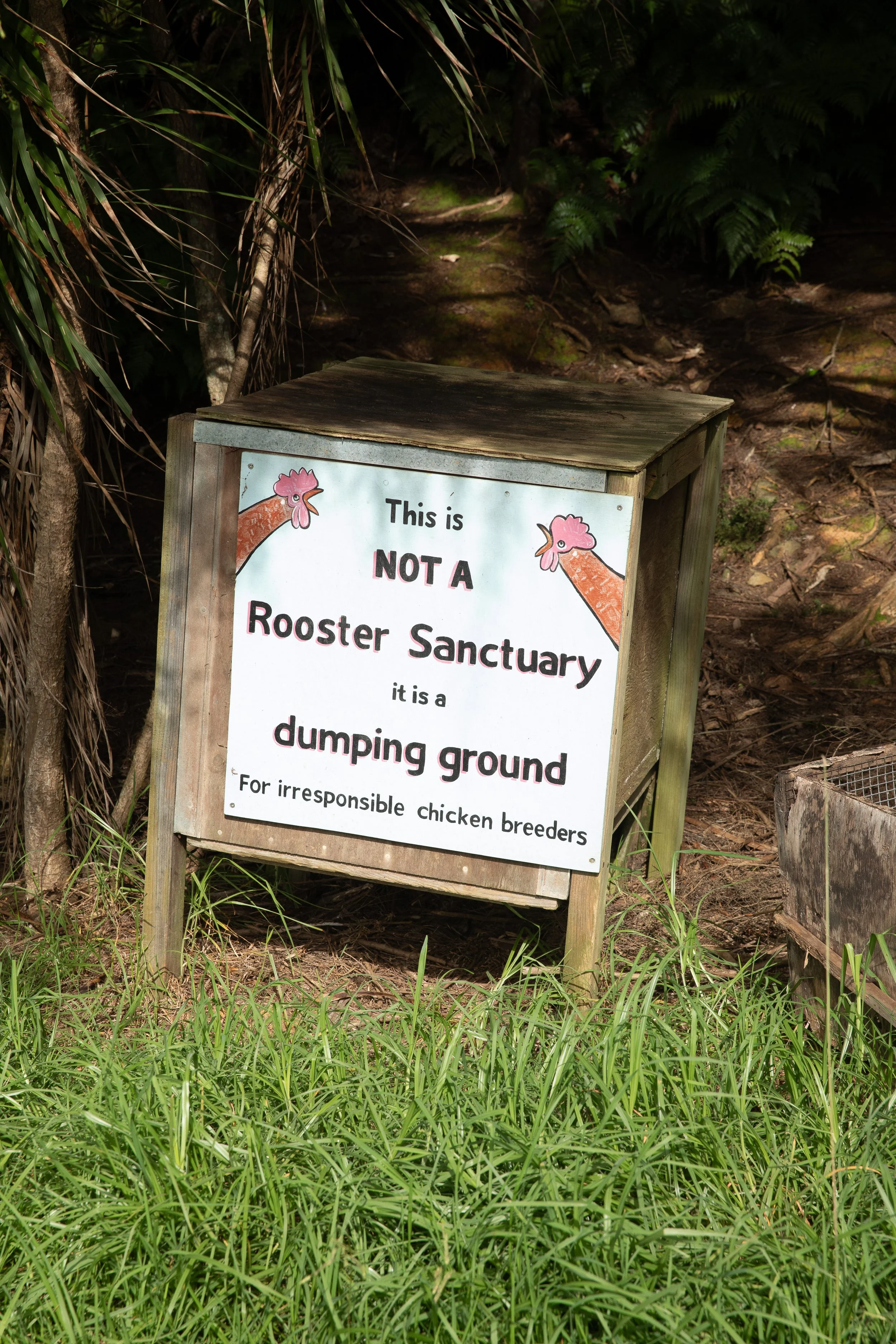
Please don't dump unwanted roosters
Unfortunately, WISCA regularly receives reports of unwanted roosters being abandoned on Waiheke. Because roosters are not permitted in residential areas due to their crowing, some people mistakenly believe the colony in Onetangi is a suitable place to leave them.
Sadly, this is not the case.
The Onetangi rooster colony is not a sanctuary. Introducing new birds into an established group of roosters often results in aggressive fighting, leaving newly abandoned birds vulnerable to serious injuries, starvation, dehydration and, in some cases, death. Many are never accepted by the existing flock.
Roosters abandoned in the area also face other dangers, including attacks by dogs and being struck by passing vehicles.
If you can no longer care for your rooster, please don't abandon it. Contact WISCA for advice. We may be able to help you with safe and humane options for rehoming.
How to prevent abandoned roosters
Consider adopting hens instead of breeding chickens
If you breed chickens, around half of the chicks are likely to be roosters. As roosters are not permitted in residential areas, many owners are left with the difficult challenge of finding suitable homes for them.
Rather than breeding chickens, consider adopting hens from an animal welfare or rescue organisation. By giving rescued hens a home, you'll be helping birds in need while avoiding the welfare issues that can arise when unwanted roosters have nowhere to go.
Some organisations that rehome hens include:
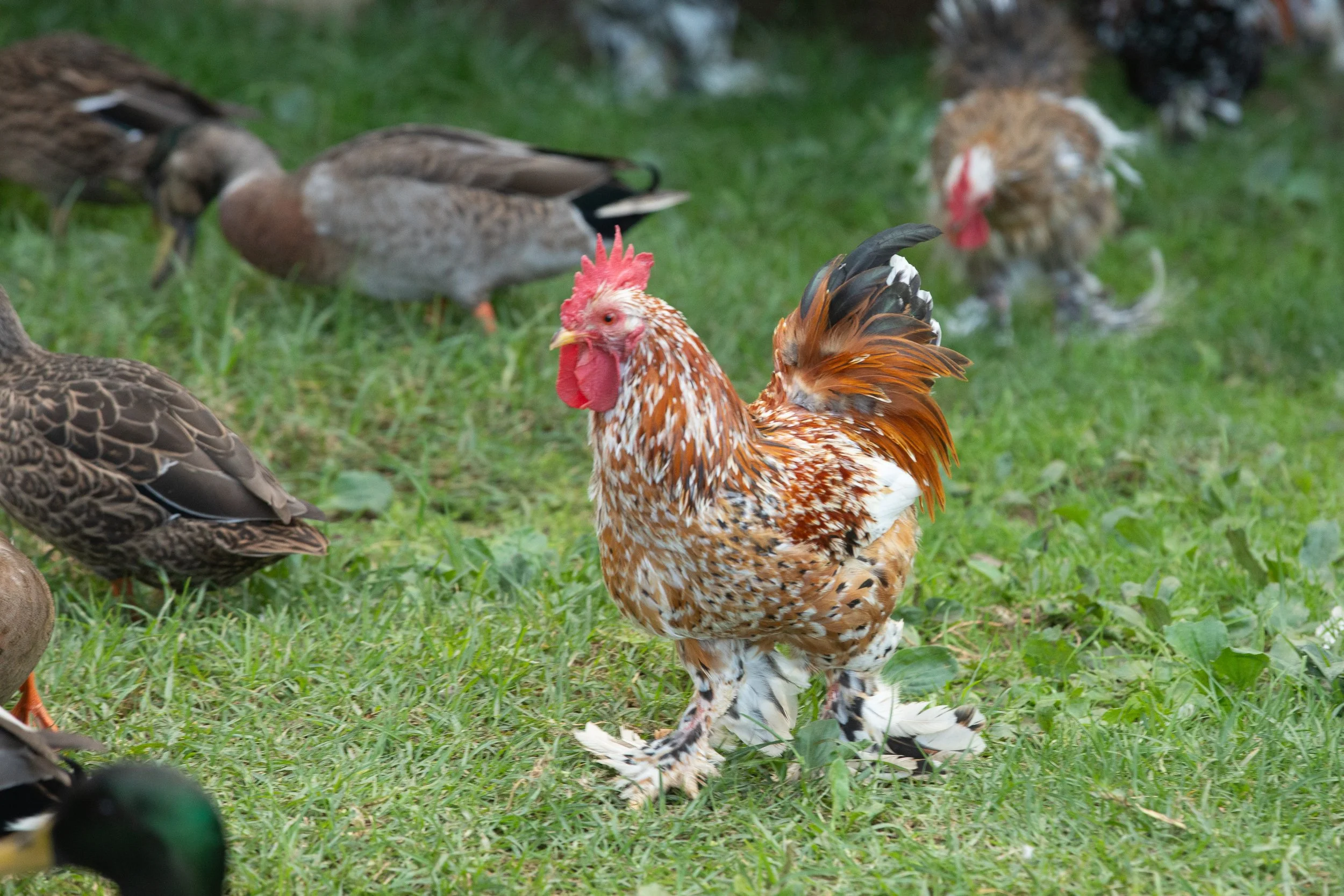
Watch our video about the roosters
*This is an old video so the bank details mentioned for donations are no longer valid.
To make a donation, visit WISCA - How you can help.